El sueño de Rajoy en la Prospe
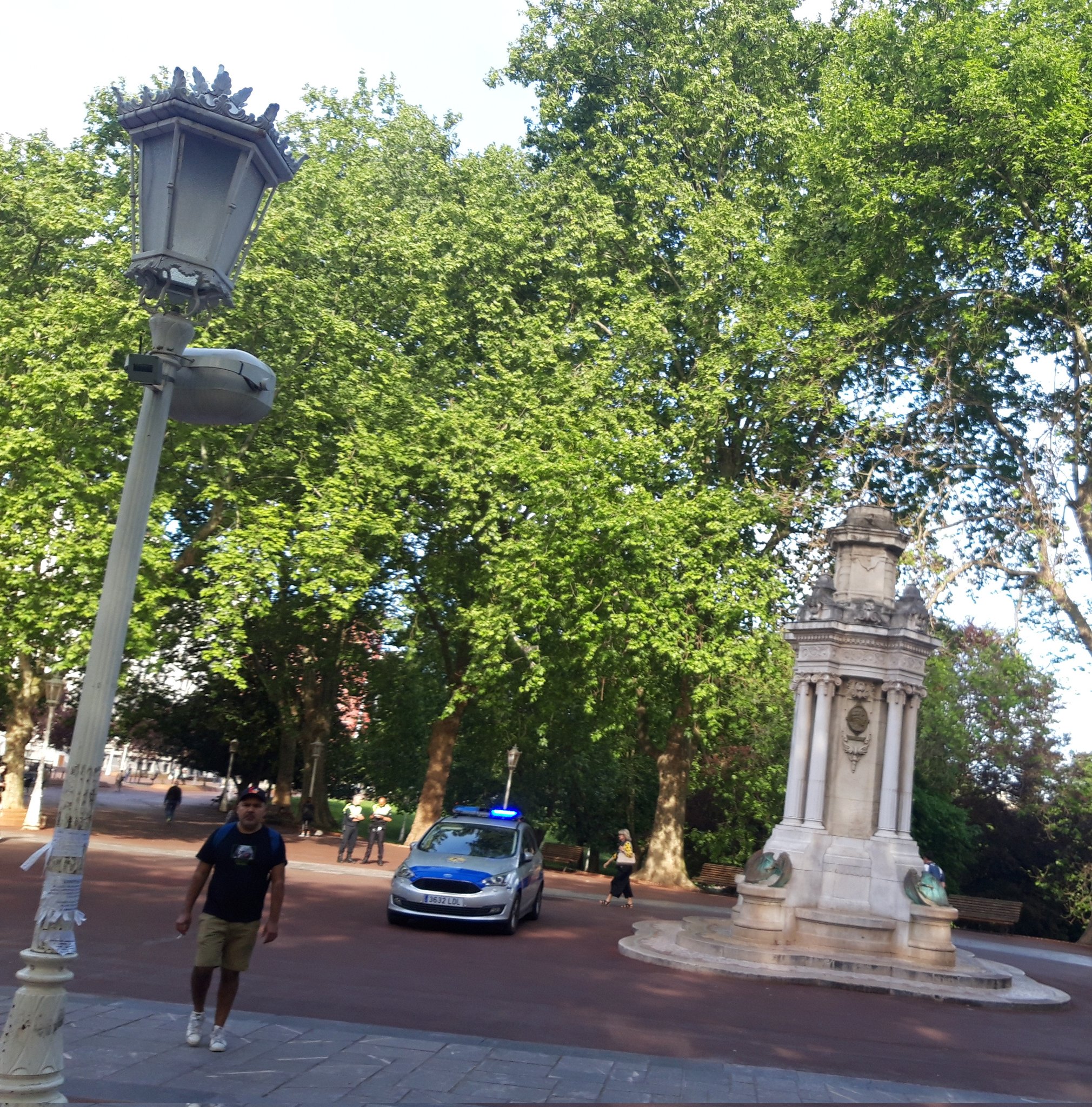
Escribir, dibujar o grabar sueños es una actividad de lo más recomendable. Acabo de ver el último vídeo del Partido Popular y creo que podría ser el sueño de Rajoy después de haber pasado una mañana por La Prospe, mi barrio de toda la vida. Hay una gran cantidad de imágenes que están rodadas allí, entre otras la imagen del cielo inicial y diferentes casas alrededor de la Plaza de la Prosperidad (Madrid).
Lo que podría ser un sueño de Rajoy a su paso por La Prospe, no es más que una producción del PP para promocionar la enésima campaña de que “esto lo arreglamos entre todos” o “el curiculum de todos” de Campofrío, que esta vez se llama #juntossalimos. A ver si con esta sí que sí que sí salimos de la eterna crisis. Un montaje rápido, memeficable (buscando el viral) con muchas imágenes sugerentes, estética youtube de archivo y una voz en off que va ligando todo el discurso. Por las localizaciones que he detectado (La Prospe y Calle Fuencarral) parace un vídeo cuidado pero rápidamente hecho. No voy a analizarlo como un cabalista, pero hay dos imágenes, y el texto ligado a ellas que tienen poco de subliminales que me gustaría destacar:
¿La parroquia como la educación de tus hijos? ¿Madrid 2020 (y van 3) como tu futuro? wtf
Para terminar, tras “eres lo que eliges, por tanto lo que eliges te representa” y mostrar a Adolfo Suárez, Superman, John Lennon, Steve Jobs y al Papa sale el 15M seguido de un corto fundido en negro. Se oye “pero si eliges no elegir, otros decidirán por ti” acompañando a dos imágenes de una manifestación en la Plaza de Neptuno (creo que la de “rodea el congreso” el 25S): gente frente a las ya clásicas vallas que impiden llegar al congreso (y una bandera republicana), seguido de la famosa escena street fighter del manifestante empujando a un policía.
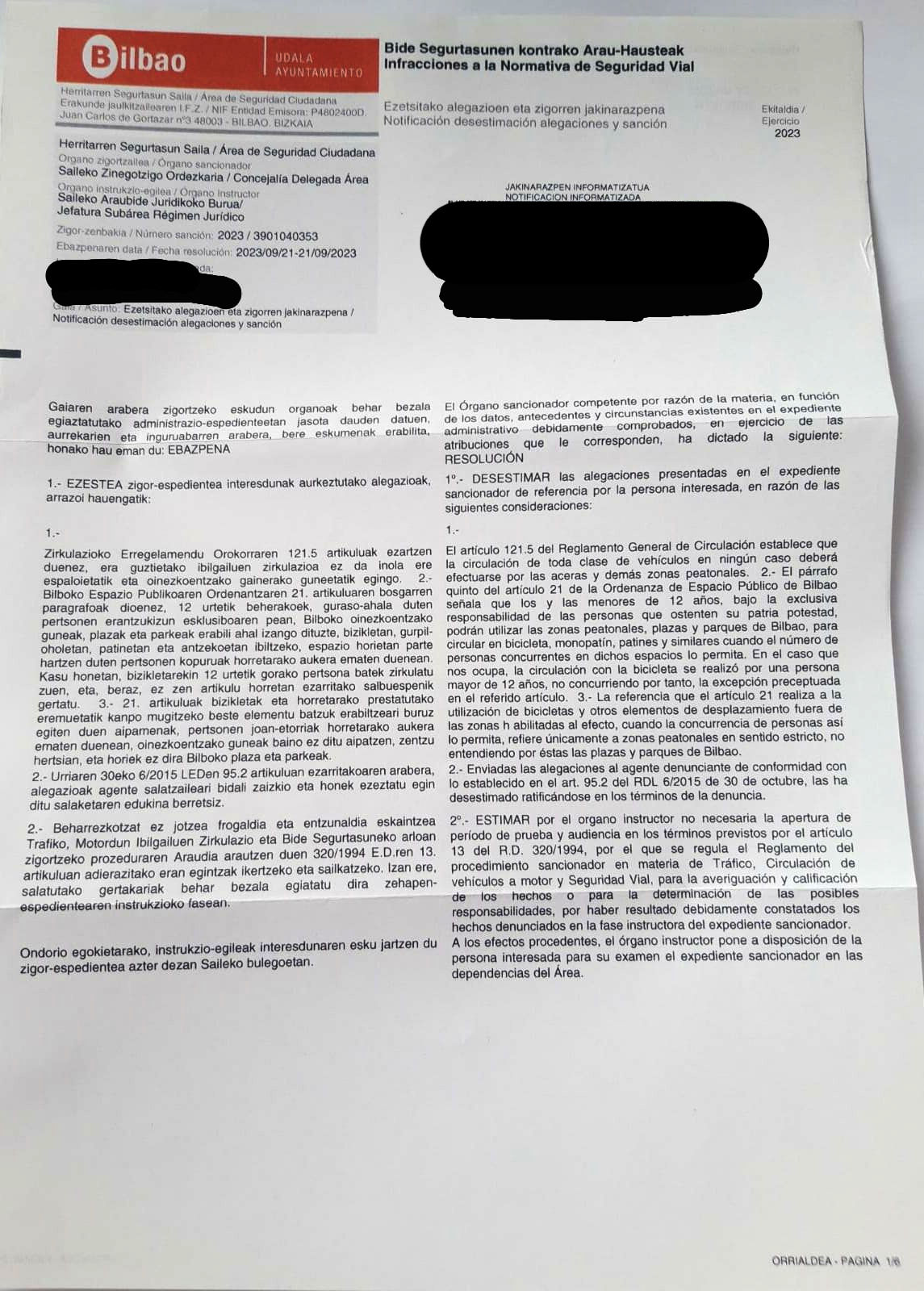
Como era la enésima vez que leía/veía algo para desligitimar las movilizaciones sociales y a favor del sistema democrático actual, pensé que sería bueno dejarlo por escrito.
Guns, Wars and Terrorism in a PageOneX real size (photo essay)
I finally installed the PageOneX real size project with stories related to guns, wars and terrorism. Come visit the display this week to the second floor of building E14 at MIT Media Lab. Thanks all of you that helped in this process: Adrienne, Luis, Álvaro, Nacho and Matjaz! What follows is a photographic guide to the PageOneX real size installation. keep reading >
A quick test with Local / National / by Continent news

After yesterday’s Guns vs Sports vs Wars I wanted to test news by location: local, for news related to the city or region where the newspaper is published; national for US news; and continent (as Ethan suggested). This visualizations fits pretty well with the previous one, as it fills the gaps of the more locally oriented newspapers like The Boston Globe and LA Times.
I do not think I will use this approach in the final PageOneX real size version, but it is interesting to view the same newspapers coded by different ways. I can imagine a par of special glasses that would allow the viewer shift from one visualization to another.
Note: I have only coded the main news (the ones with bigger size).
I would have never thought it was so difficult to get the paper
It was one of those ideas that seemed easy: to build a real size 1:1 scale of a PageOneX analysis. I just needed to buy 4 newspapers during 4 weeks, highlight certain stories, and put them on the wall. However, as it usually happens, things are easier said that done.
Finding the newspapers
I thought that buying the newspapers everyday would be the easy part, a question of self-discipline, but things are not what they seem. My first idea was to get them from the public libraries, but at the Cambridge Public Library they told me that they are forced to destroy them after 4 months. The next approach was to go buy them.
It’s easy to find The New York Times at any corner. It costs $2.5 on week days and $6 on Sundays. It’s also easy to buy The Boston Globe, if you live in Boston. In my case, I am getting the Globe directly from them, as they have an open collaboration with the Center for Civic Media, where I am now based.
It got more complicated when I went to buy Los Angeles Times and the The Washington Post. It is not possible to buy them in Boston. I went to the bigger news stands and called the newspapers directly: they are not sold in the region, and I guess it would happen the same in other regions of the US. You can get Le Figaro or Le Monde with some days of delay, but not LA Times or Washington Post in the classical “Out of Town News” in Harvard Square. Anyone needing proofs that print press are having a bad time? So, my next step was to subscribe to those newspapers.
After a few phone calls I was able to subscribe to The Washington Post that Saturday for 4 weeks for $72, initially I had to buy at least 8 weeks. To get copies of the previous days I would have to pay the standard fee $10/copy. I also tried to get an online access as a subscriber, but it was not possible with my post subscription. They told me that I would receive the Washington Post told with a 2-4 days latency.
Los Angeles Times offices were not opened on weekends, so I had to wait until Monday to get the 8 week subscription, the minimum required, for $167. Luckily, I was able to get the papers from the days previous to my subscription. I would receive the papers with a 7-8 days latency, as they send them through regular post.
Newspapers at home
I hadn’t had the newspaper at home everyday since I was living with my parents. Finally directly in touch with the objects I’ve been studying all these past months: paper front pages. I could physically experience the overload of information and advertisement, piles of papers piling up on top of my closet. I could also see the above and below the fold news and experience the difficulties of the paper navigation. I find it really difficult to read these huge newspapers that are split into different booklets that fall apart when you open them. I also found the full page ads in the last page, which would be a great second phase of this project, a LastPageX visualization.
By now I have all NYtimes and Boston Globes since day one (March 26th). I am missing LA Times papers since April 9th (congruent with a 7 day latency), and from The Washington Post I miss the period March 26-29, April 8th, and since April 12th.
I have to start the installation this Wednesday April 17th. Therefore, for the newspapers that would have not arrived by then, I will have to use printed copies of the front pages, or maybe display a 404 error white page?
It’s being a good experiment on how difficult it is to get the paper copies of these newspapers. I can test now what I had written in the PageOneX description hundreds of times: that digital coding would avoid the problems of buying and storing newspapers.
One night the guy from the convenience store told me, when I tried to buy the NYTimes in his shop: we don’t sell newspapers, why would we when you can read them online?
What to code? Guns, Sports and Wars
After an initial test I’m exploring the possibility of coding: Gun control vs Sports vs International War Conflicts. Here is how it would look like:
I also coded Gay Marriage and Cyprus economic Crisis news, but I think there was not enough and continued coverage to include them in the graphic.
- International War conflicts: Syrian, North Korea, Afgahinstan, Iran and Isael-Palestina.
- Guns: the debate on gun control and killing by guns in the US.
- Sports: basketball, baseball, golf, wrestling, marathon.
I am still open to suggestions! Bear in mind that what ever topics I select, I’ll have to manually cut the transparent pieces of colored plastic to put on top of the newspapers.
Want to join the coding process?
I will be reading papers + cutting plastic sheets from this Wednesday until Friday. Contact me if you want to join. It’s going to be fun to have access to all these newspapers. I am envisioning more projects beyond this one!
-
PS: when I was about to close this post, the Boston Marathon explosions occurred. How will it influence press coverage these following days?
Cross-posted at civic.mit.edu
Sueño de color
Fuimos a visitarle a su casa, resulta que vive por aquí cerca, en Boston. Tenemos una amiga común, pero no recuerdo su nombre. Una mujer mayor de pelo cano que vive en una casa con nombre propio ¿que había diseñado él mismo?
Es el Picasso mayor, calvo, pero muy animado y activo. Es sorprendente haber ido a su casa a cenar. Le pregunto por cómo se siente con tanta retrospectiva ¿o es la pregunta que imagino haber preguntado?
Me habla de uno de sus últimos proyectos. En una de esas estaciones de tren en mitad de la nada él va con un traje de chaqueta. La cosa es que ese traje desprende pintura de colores, y según se va apoyando en el edificio, lo va pintando. Una especie de gamberrada o arte público que va llenando de color la pared y a él mismo. Recuerdo los rojos en la pared y sobre su corbata, camisa y chaqueta. Algún azul tal vez, negros cerca del suelo. La pared cada vez más coloreada mientras él sigue girando y girando para pintar la estación entera.
Una especie de arte furtivo, pero no tiene quien lo persiga.
Basura = trash.
ama = love.
-orama = wide view of.
Basurama = wide view of + love trash
I’ll be giving a talk tomorrow Wednesday April 3rd about Basurama. I am presenting the multidisciplinary activities we develop around/with trash and the paper Basurama: a framework for designing collectively with waste (just presented to the Reclaim + Remake Symposium next week in Washington DC).
It will be at the Mahindra Center for the Humanities/Barker Center invited Cultural Agents Initiative and Harvard Humanitarian Initiative.
What: Talk: Basurama: a framework for designing collectively with waste
When: Wednesday, April 3, 2013 – 6pm – 8pm
Where: Barker Center, Seminar Room 133, Harvard University. 12 Quincy Street, Cambridge, MA.
Besides, for the end of the month, April 20th, I am preparing a waste installation How to picture 2 tons of waste? for April 20th. It’s going to be fun and… I need your help!
#
Who wrote the news? Gender in the front page
Newspaper coverage goes 1:1 scale

PageOneX: How newspapers tell the story? This is how the project would look like at the MIT Media Lab Festival
PageOneX keeps moving forward. We want to have it ready for the spring, but first we have to solve a large list of bugs and other issues. A lot to code! So much coding that we sometimes forget that paper newspapers are real objects. That’s why we want to make a physical visualization of newspapers, a 1:1 scale version of PageOneX for the MIT Media Lab Festival (April 2013).
We have yet to decide the topic/s we want to focus on and when we are going to start buying newspapers. Our original plan is having New York Times, Los Angeles Times, Washington Post and The Boston Globe.
Do you have any suggestion about which topic we should follow? When to start buying the newspapers?
We are inspired by other people that have done similar displays with real newspapers that we have came across recently:
The film Manufacturing Consent: Noam Chomsky and the Media (1992) (available to watch in archive.org) by Mark Achbar and Peter Wintonick makes visual what the book Manufacturing Consent by Chomsky and Herman describes. They use as a case study the coverage of Timor war and Cambodia wars, that were happening simultaneously (1975-1979) by stitching together all the columns of text that The New York Times dedicated to each topic. Column inches is the measure that academics (and advertisers) have used to measure the amount of coverage. It was a way to show the different amount of coverage that state atrocities get, depending if they came from friend or allies states or from official enemies of the US. It is an empirical demonstration of the propaganda model.
Genocides coverage in column inches in The New York Times:
- Timor 1975 Indonesia occupation (left column: 70 column inches)
- Cambodia Khmer_Rouge, Pol Pot (right column: 1,175 column inches).
They also make a wonderful display of surface area dedicated to see the ratio of advertisement and news in a The New York Times newspaper (we are thinking on replicating this data visualization):
Inspired by the Manufacturing Consent film Siemon Allen made his Newspaper project. He was struck by the fact that during the same period 1975-1979 in South Africa another important event was happening “the Soweto uprisings, heightened police oppression, the expansion of separate development, and the death of many activists, including Steve Biko”. He made similar visual displays to show how was the coverage about South Africa in US newspapers:
Showing certain news in newspapers or cutting and pasting the news in long strips.

Siemon Allen Newspaper project. Hightlighing certain news

Siemon Allen Newspaper project. Cutting the news and forming strips.
He also made standard data visualization (pie charts) when he analyzed the content of the news and classified it: aids, sport, culture, crime…

Siemon Allen Newspaper project. Percentage of coverage to certain categories in The Washington Post.
Note: The photos from the film are screenshots I took. The Siemon Allen images are all extracted from his website.
Cómo aumentar el tamaño máximo de subida de archivos en wordpress en gandi.net
Desde hace un tiempo en motnera34 estamos mudando todas nuestras páginas a un hosting en gandi.net. Después de superar los problemas de bases de datos de wordpress de más de 10Mb con BigDump, parece que todo estaba solucionado. Lo que pasa es que nos habíamos olvidado del tamaño máximo de subida de archivos desde el propio escritorio de wordpress, por defecto es 2Mb. Para aumentarlo, al menos en gandi.net, basta con incluir ahcer una pequeña modificación en el .htaccess. El .htaccess está en el directorio raiz de tu servidor, cuando lo descargues es probable que no puedas verlo, tendrás que dar en tu navegador de archivos a “ver archivos ocultos”, que son todos aquellos que tienen un punto delante.
Edita el .htaccess y añade estas líneas:
php_value upload_max_filesize 64M
php_value post_max_size 64M
php_value max_execution_time 300
php_value max_input_time 300
Vuelve a subirlo donde lo habías encontrado, en el raiz de tu servidor.
Encontré la solución tras probar las diferentes opciones que contaban en wpbeginner.
![Su educación [de tus hijos].](http://numeroteca.org/wp-content/uploads/2013/05/130505_juntossalimos-educacion_1.00.png)